
Is AI going to kill consulting? No.
Will AI change consulting, particularly technical consulting? Of course.
Will AI shrink consulting? Depends on economic growth and other factors.
Having put a few stakes in the ground please give me a few minutes to defend them.
Rumors of Consulting’s Death Are Greatly Exaggerated.
Ever since LLM-based AI became public, and people started to ask them questions, I have heard people saying AI will kill consulting. Often they make it sound like something that will happen next year, or even next week. I believe people who say this misunderstand of the purpose of consulting.
Consultants aren’t hired to answer questions.
Consultants are hired to solve problems.
When I go out and hire a consulting firm – I currently work with two – I am looking to them to solve problems for me. I don’t expect to run out of problems. Why expect me to stop hiring people to solve them?
Consultants address technical challenges, offer strategy advice, fill staffing shortages, and more. AI support can help a team move faster it does not magically resolve those kinds of problems.
As long as companies have problems, and a pile of cash, consultants will take some of the cash to provide solutions.
That does not mean the job of consultants won’t change. Big changes are already happening.
AI Driven Consulting of the Near Future
I expect consulting, and consultants, will evolve because of AI but not disappear.
Technology has caught up to science fiction, which is kinda cool and a bit scary. This is not the first time, it actually happens reasonably often.
Anyone talking about the future is guessing. No one really knows what happens next. This is not because of AI. Humans have never been able to predict the future.
AI is already changing how consultants work. Done well that is a good thing. As a consultant I often joked that I was a help doc cache, with Google keyword optimization: If I couldn’t remember what I needed, I knew how to search for the information I needed really fast. That skill set is less valuable today than two years ago, and dropping fast. As AI assistants get better they need less and less context to find the right answer.
In truth consultants also bring that context, best practice, and lived experience. A lot of information going into training AIs is coming from people like that. The AIs still don’t have judgement, they have information that all existed before they did. They make it faster to find and understand that information, not create it.
Efficiency is a good thing. AI helps accelerate common consulting research tasks, draft code faster, analyze documents, generate proposals and reports, and provides other ways of accelerating work.
AI does not currently do all those things well. They still require an expert guiding it and knowing when to ignore it. Someone has to check that research, validate the code, understand what documents need analysis, select the reports to write, and more.
Additionally, LLMs lack a good way to understand when the information they were trained on is wrong. When a model is trained the team cannot fact check everything. How should Anthropic know when the Salesforce help docs are out of date and wrong? A human finds out by following instructions and learning they are wrong. LLMs will repeat the same wrong information until it gets retrained on enough blog posts to correct it.
More over, AI doesn’t remove the need for companies to hire outside help and guidance. Even if my team can do more without help, that will just mean we take on more work: there will still be margins beyond our capacity.
People who want to stay in consulting will need to learn how to apply these tool to problems their clients bring to them. Problems caused by a lack in internal staff time, a lack of internal experience, and other gaps that all organizations face.
Any scenario where clients can entirely replace the human consultants also allows that client to replace their human staff. And that is a different topic.
Future Consulting Workforce Size

My personal guess is that the number people working in consulting in the future will be driven more by other market forces than by AI. There are some places laying people off because their leadership believes AI will make their team faster right now, therefore more can be done with fewer people. That’s not new, businesses have been doing that for years (centuries really).
There is going to be turn over and churn in the consulting world. Change, particularly for technical consultants, has been required to survive for a long time. I expect most people currently in consulting will be able to pivot, because they are already adaptable. Some people will get run over as their highly prized skill sets drop in value (hopefully not by teapot riding droids). At the same time new opportunities will emerge in the market.
As a consultant I served clients who used Drupal and Salesforce. When I graduated from college neither of those platforms was mature enough to support…well much of anything. Overtime the markets for those specific skills will fade (Drupal already is seeing this), but the market for problem solving will remain.
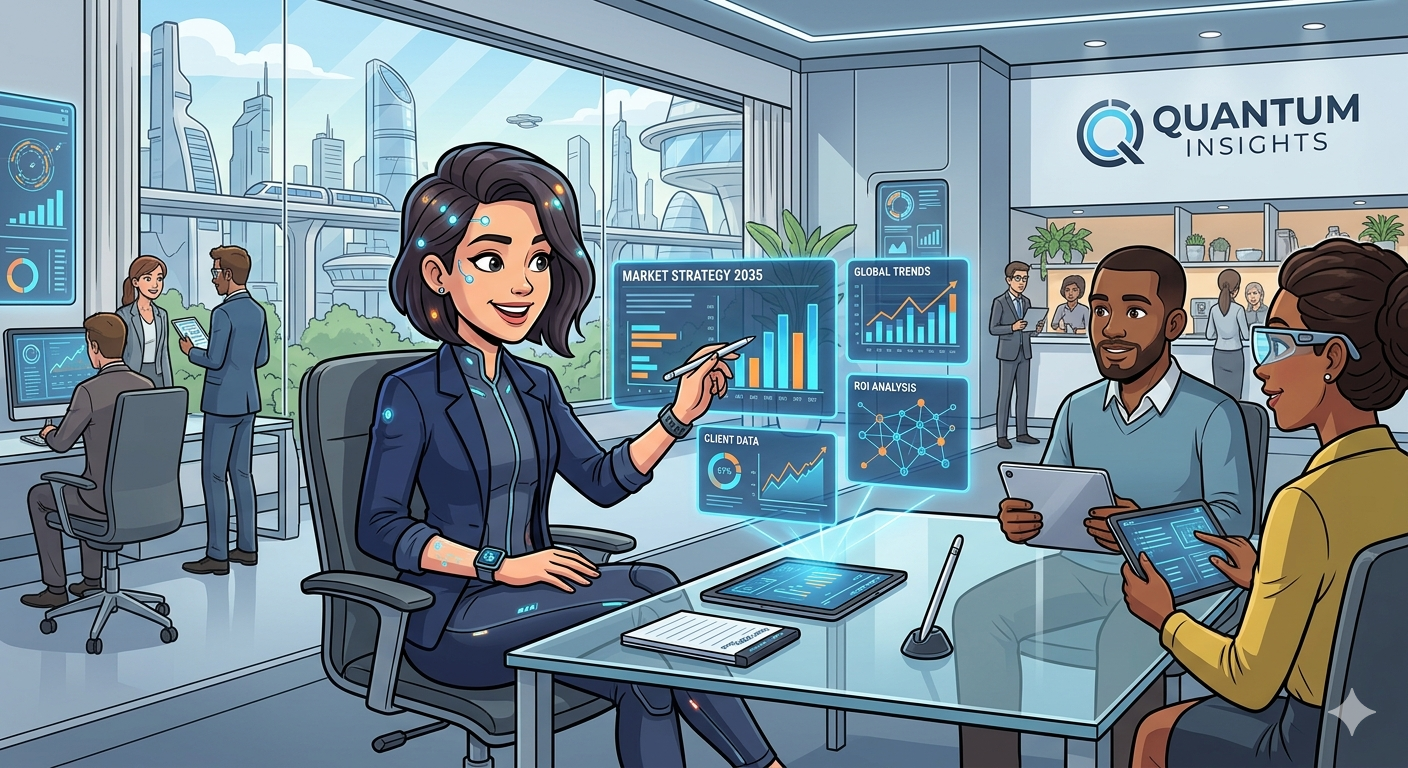
I’ve already seen signs that people leaving large firms are working to start their own smaller firms. I haven’t seen data to show that’s a trend yet but that is a normal market cycle. Demonstrating that AI is changing the market cycle requires data, not hype. From where I sit it looks like it’s triggering a standard cycle.
In the longer term, consulting will grow or shrink based on the overall growth of the economy. Companies will still want to temporarily augment their team for special projects. Even the most efficient person has their limits, always leaving room for temporary needs.
What Should An Individual Do?
I’ll freely admit that I took a client-side job this year, in part, because I wanted off this particular ride. Not everyone can, or wants, to make that choice. Just because it’s right for me does not make it right, or possible, for everyone.
Individuals who want to stay in consulting will need a proven background in multiple areas. Don’t be wedded to the tools, technologies, and markets you know now. The market for those could be hollowed out.
The future of the Salesforce consultant is driven by the future of Salesforce. The reduced cost of creating new platforms will almost certainly create new competitors for Salesforce. Salesforce can survive that tougher competition. But it might not. My guess is they will take some hard hits and then recover. Either way those new platforms will need people to set them up, help people migrate, and other similar things. AI will support those efforts, humans who know the process will still be wanted.
I believe this scenario is going to be repeated across the entire economy.
Closing Thoughts
Can I imagine AI tools that replace a good discovery, strategic review, and planning process? Sure
Today, we don’t appear to be particularly close to those existing. LLMs as we know them have too many fundamental flaws to get us there. But they are a great proof-of-concept that more is possible.
Even if an AI discovery platform existed, my employer would buy those services from another company. That company would need domain experts who understood what the tool needed to do.
If we reach a point where the human isn’t needed at that level either, we are on the other side of a technological singularity. At that point all bets are off.
I had an energetic discussion with another Salesforce MVP the other day who is optimistic that our AI overlords would treat us like we treat well loved house cats and provide for our every need. I don’t share that optimism, but we really have no way to know until we get there.